What Will Our Kids Do?
🧭 The future runs on imagination

The Question Every Parent Is Asking
In almost every conversation about the future — whether it’s with friends, investors, or other parents — someone eventually asks:
“If AI does everything… what will our kids do?”
It’s not just about jobs.
It’s about purpose, belonging, and meaning.
Balaji says kids will soon choose their community, not their college.
David Mattin calls this moment the Economic Singularity.
And The Prophet writes that status is shifting from money to meaning.
They’re all circling the same idea: our children won’t live in a world defined by careers, but by connection.
When intelligence is abundant, humanity becomes the differentiator.
1. From Ladders to Surfboards
For much of the last century, life was linear.
Pick a major, get a job, climb the ladder.
That ladder is gone.
The new economy moves in waves — bursts of opportunity, short projects, temporary teams.
David Mattin’s advice is simple: build your child a surfboard.
The skill of the future isn’t mastery of a single thing, it’s balance — the ability to spot the next wave and ride it without drowning in the noise.
Our job as parents is not to map their route but to teach them balance, curiosity, and courage.
2. Credentials Collapse, Community Rises
College used to be three things: knowledge, credential, and network.
AI has made the first two nearly free. What remains is community — the network that teaches you how to think, not just what to know.
Balaji’s point is provocative but probably right: the next Harvard will look more like a Discord.
Instead of four-year degrees, our kids will join digital guilds, cohort DAOs, and hybrid local-global tribes that align with their values.
For the millennial generation, our path was still recognizable to our parents.
College, career, mortgage — variations on a familiar theme.
That continuity limited our imagination.
Our kids won’t have that luxury.
They’ll grow up in a world that changes faster than institutions can update.
The next credential won’t be a diploma, it’ll be a community that trusts you.
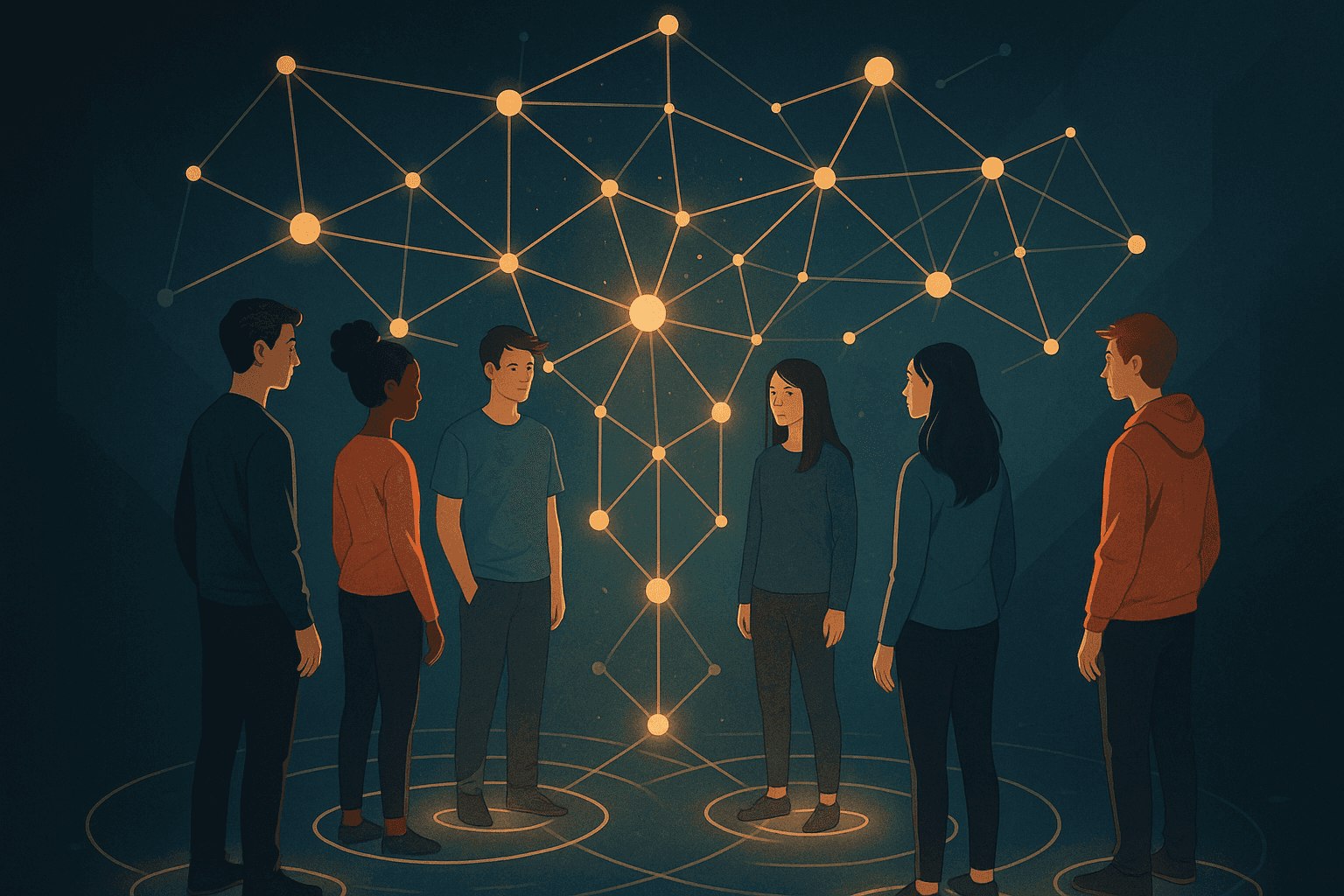
3. When the Scarce Thing Is Being Human
As AI handles more cognitive work, the scarce currency flips.
Intelligence becomes abundant; empathy becomes valuable.
Mattin calls it “learning to speak human.”
The Prophet calls it “meaning as the new alpha.”
I’d call it return on emotion — your ability to connect, persuade, and make others feel seen.
Debate, storytelling, and persuasion — these aren’t soft skills anymore.
They’re how humans stay relevant in a world of perfect logic.
“He who has a why to live can bear almost any how.” — Nietzsche
Our kids’ why — their humanity — will be their most valuable asset.
4. We Lost Imagination — But They Won’t
Millennials were raised in a world that still mirrored our parents’.
Our jobs, education, and social structures were recognizable, even predictable.
That stability dulled our imagination.
But the data suggests imagination itself has been in decline.
Creativity scores on the Torrance Tests have fallen steadily since the 1990s.
Researchers find imagination vividness drops sharply from adolescence onward.
We became efficient adults — but less inventive ones.
Our children won’t have that choice.
Their world will be so unlike ours that imagination becomes a survival trait.
The question isn’t “what will they do?” but “what new things will they imagine?”
5. The Creator as Default Worker
By the 2030s, most people won’t work for companies — they’ll work through communities.
The traditional résumé will look more like a Substack profile or an onchain reputation graph.
AI will automate the back office; humans will provide the story, vibe, and trust.
A billion micro-creators — each with a thousand true fans — form the new middle class.
The child who once would’ve been a consultant or lawyer may instead run a channel, host a network, or lead a niche.
The scale is smaller but the meaning is larger.
6. Strange as Strategy
Industrial education rewarded conformity.
Intelligent economies reward weirdness.
In a world where AI can instantly replicate the average, differentiation lives at the edges.
Taste, point of view, and distinctiveness become compounding assets.
Encourage your kids to follow their odd curiosities — the stranger, the better.
That’s where their future tribes will find them.
7. Cultivate the Garden
Voltaire closed Candide with a line that feels more relevant than ever:
“We must cultivate our garden.”
The garden is both metaphor and map.
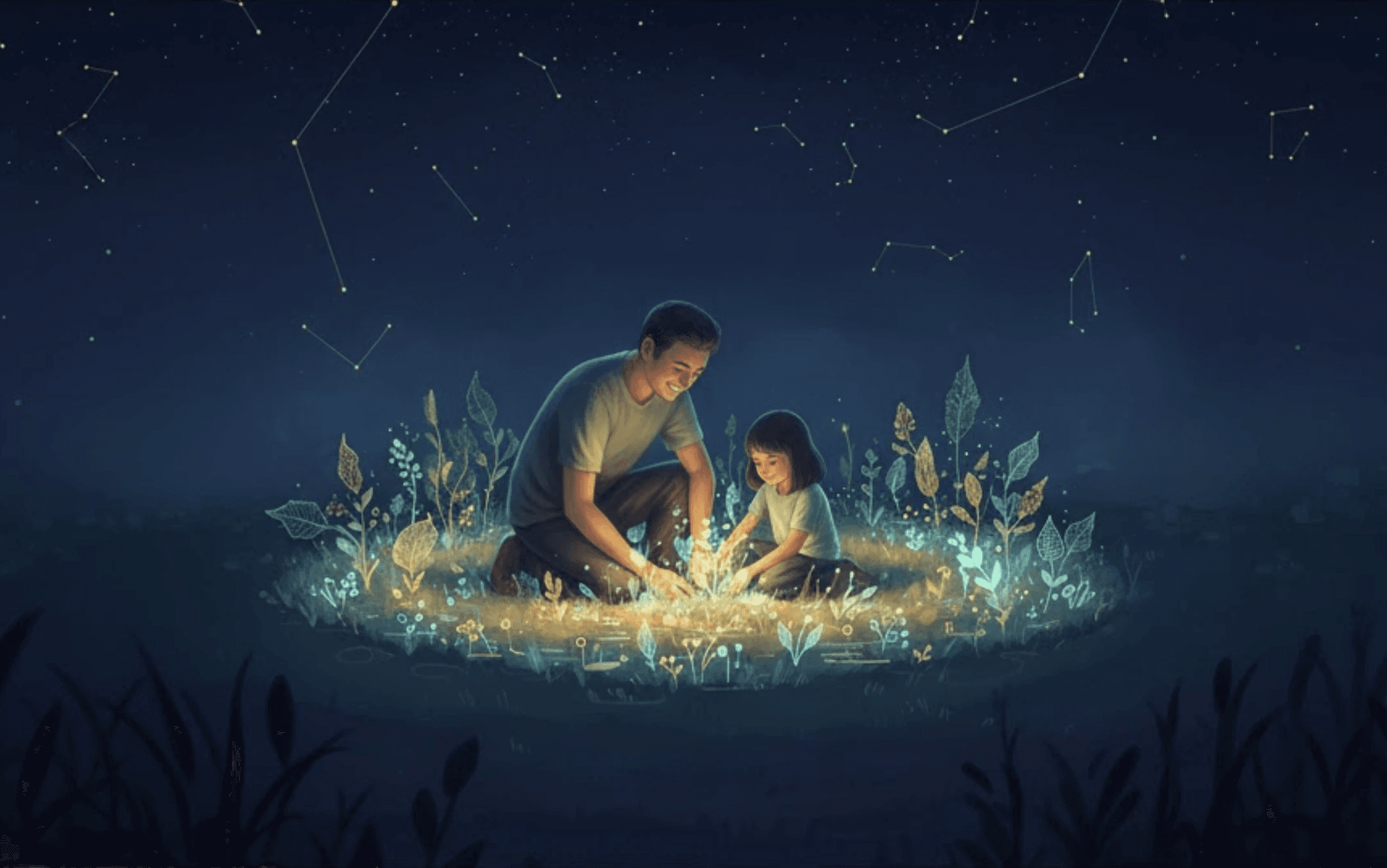
It’s the small circle we can tend amid the chaos of a world remade by AI.
The family, the community, the local ties that give identity its soil.
In a world that optimizes for scale, the counter-move is intimacy.
Our kids will need to know how to grow small, strong ecosystems of trust and belonging — both online and off.
Closing Reflection
Our children’s world will not mirror ours.
They’ll surf waves we can’t yet see, guided not by degrees or job titles but by curiosity and community.
The best preparation isn’t protection — it’s permission.
Permission to imagine, to fail, to reinvent themselves again and again.
The world they inherit will move faster than ours ever did — but if they can imagine, connect, and adapt, they’ll be fine.
In the end, our job isn’t to predict their future.
It’s to help them become the kind of people who can thrive in any one.